Get ready to experience a slice of tropical paradise with this incredibly moist and flavorful pineapple juice cake. This delightful dessert combines the sunny sweetness of pineapple with a tender, fluffy texture that melts in your mouth.
Perfect for spring gatherings or summer celebrations, this cake brings the perfect balance of fruity brightness and classic cake comfort. The natural acidity of pineapple juice creates an exceptionally tender crumb while adding a subtle tropical twist to this easy-to-make treat.
Why You’ll Love This
- Simple pantry ingredients with no fancy tools needed
- Extra moist texture that stays fresh for days
- Perfect balance of sweet and tropical flavors
- Ready in under an hour from start to finish
- Makes a beautiful dessert for any occasion
Ingredients
- 2 cups (250 g) all-purpose flour — spoon-and-leveled for accuracy
- 1 ¾ cups (350 g) granulated sugar
- 1 tablespoon baking powder (yes, a full tablespoon; the juice is acidic)
- ½ teaspoon fine sea salt
- 3 large eggs, room temperature if you can plan ahead
- 1 cup (240 ml) pineapple juice — fresh if possible, not from concentrate
- ½ cup (120 ml) neutral oil (grapeseed works; melted coconut oil is fine)
- 1 teaspoon vanilla extract
- Zest of 1 small lemon (optional but brightens things)
Instructions
- Preheat and prep. Heat the oven to 350 °F (175 °C). Grease every nook of your pan with butter or non-stick spray, then dust lightly with flour. Tap out the excess; Bundt patterns are unforgiving if cake sticks.
- Dry mix. In a large bowl, whisk flour, sugar, baking powder, and salt. Whisking (rather than sifting) cuts down on dishes while still aerating the batter.
- Wet mix. In another bowl or big measuring jug, whisk eggs until streak-free. Add pineapple juice, oil, vanilla, and lemon zest. The mixture will look thin—that’s correct.
- Combine. Make a well in the dry ingredients and pour in the wet mixture. Switch to a rubber spatula and fold just until no dry pockets remain. Stop while the batter is still a little lumpy; over-mixing toughens the crumb.
- Bake. Scrape the batter into your prepared pan, tap once on the counter to pop large air bubbles, and set on the middle oven rack. Bake 43–50 minutes (Bundt) or about 55 minutes (loaf) until a skewer comes out mostly clean; a moist crumb or two is perfect.
- Make the glaze while the cake bakes. Combine pineapple juice, butter, sugar, and salt in a small saucepan. Bring to a gentle boil, stirring. Let it bubble for 2 minutes; remove from heat and stir in vanilla. It will smell like pineapple caramel.
- Soak. As soon as the cake exits the oven, leave it in the pan and prick the top with a skewer—about twenty holes. Slowly spoon half the hot glaze over, giving it time to seep in. (source: Ineskohl.info)
- Cool and unmold. Rest the pan on a rack for 15 minutes; the cake contracts slightly as it cools, making release easier. Invert onto the rack and lift the pan. If it resists, tap the sides or lay a damp towel over it for a minute.
- Final gloss. Brush or drizzle the remaining glaze over the warm cake. It sets to a shiny coat that catches the light. Cool at least another hour before slicing so the crumb firms up and flavors deepen.
Tips & Variations
- Use fresh pineapple juice for the best flavor, but canned works too
- Add 1/2 cup shredded coconut to the batter for a tropical twist
- Make a simple glaze with powdered sugar and pineapple juice
- Transform into cupcakes by adjusting baking time to 18-20 minutes
Serving Suggestions
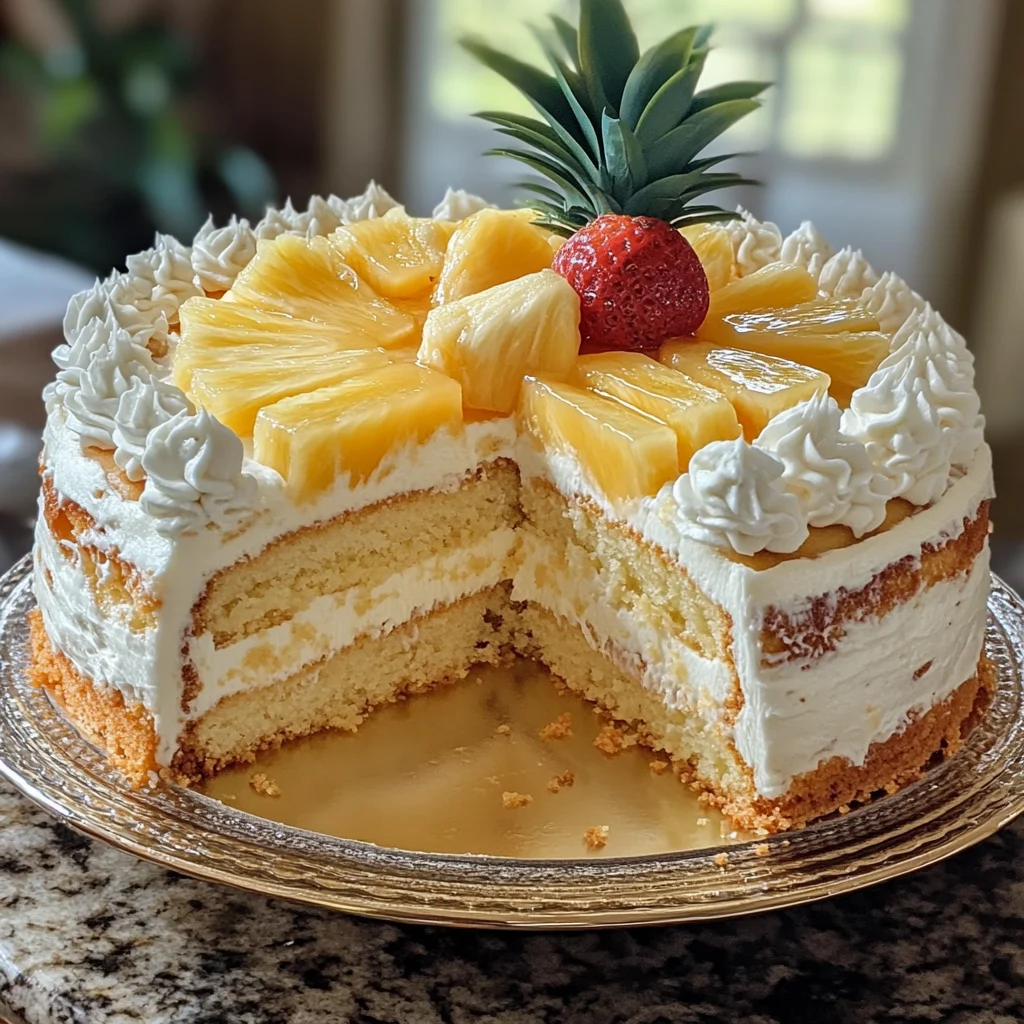
Serve this cake slightly warm or at room temperature with a dollop of whipped cream and fresh pineapple chunks. For an extra special touch, drizzle with warm caramel sauce or dust with powdered sugar just before serving.
Notes
- Store covered at room temperature for up to 3 days
- Cake can be frozen for up to 2 months
- Best served within 24 hours of baking
FAQs
- Can I use cake flour instead of all-purpose flour? Yes, use the same amount but expect a slightly lighter texture.
- Why did my cake sink in the middle? Make sure your baking powder is fresh and avoid opening the oven during baking.
- Can I make this without eggs? Try using 1/4 cup applesauce per egg as a substitute.
- Is this cake too sweet? No, the pineapple juice provides natural sweetness balanced by the slight acidity.
Servings4
Prep15 min
Cook10 min
Calories—
Ingredients
- 2 cups (250 g) all-purpose flour — spoon-and-leveled for accuracy
- 1 ¾ cups (350 g) granulated sugar
- 1 tablespoon baking powder (yes, a full tablespoon; the juice is acidic)
- ½ teaspoon fine sea salt
- 3 large eggs, room temperature if you can plan ahead
- 1 cup (240 ml) pineapple juice — fresh if possible, not from concentrate
- ½ cup (120 ml) neutral oil (grapeseed works; melted coconut oil is fine)
- 1 teaspoon vanilla extract
- Zest of 1 small lemon (optional but brightens things)
Steps
- Preheat and prep. Heat the oven to 350 °F (175 °C). Grease every nook of your pan with butter or non-stick spray, then dust lightly with flour. Tap out the excess; Bundt patterns are unforgiving if cake sticks.
- Dry mix. In a large bowl, whisk flour, sugar, baking powder, and salt. Whisking (rather than sifting) cuts down on dishes while still aerating the batter.
- Wet mix. In another bowl or big measuring jug, whisk eggs until streak-free. Add pineapple juice, oil, vanilla, and lemon zest. The mixture will look thin—that’s correct.
- Combine. Make a well in the dry ingredients and pour in the wet mixture. Switch to a rubber spatula and fold just until no dry pockets remain. Stop while the batter is still a little lumpy; over-mixing toughens the crumb.
- Bake. Scrape the batter into your prepared pan, tap once on the counter to pop large air bubbles, and set on the middle oven rack. Bake 43–50 minutes (Bundt) or about 55 minutes (loaf) until a skewer comes out mostly clean; a moist crumb or two is perfect.
- Make the glaze while the cake bakes. Combine pineapple juice, butter, sugar, and salt in a small saucepan. Bring to a gentle boil, stirring. Let it bubble for 2 minutes; remove from heat and stir in vanilla. It will smell like pineapple caramel.
- Soak. As soon as the cake exits the oven, leave it in the pan and prick the top with a skewer—about twenty holes. Slowly spoon half the hot glaze over, giving it time to seep in. (source: Ineskohl.info)
- Cool and unmold. Rest the pan on a rack for 15 minutes; the cake contracts slightly as it cools, making release easier. Invert onto the rack and lift the pan. If it resists, tap the sides or lay a damp towel over it for a minute.
- Final gloss. Brush or drizzle the remaining glaze over the warm cake. It sets to a shiny coat that catches the light. Cool at least another hour before slicing so the crumb firms up and flavors deepen.
Notes
- Store covered at room temperature for up to 3 days
- Cake can be frozen for up to 2 months
- Best served within 24 hours of baking